London Festival Opera’s programme ‘Opera at the Movies’ is proving popular for theatre and festival appearance, as well as for charity and special events.

Many celebrated filmmakers feature opera in their movies knowing that this will add an extra dramatic and emotional dimension to key scenes. Opera brings a depth and richness to the cinematic experience like no other music.

Opera at the Movies is a programme of passion, drama and humour of celebrated opera pieces featured in films including Pretty Woman, Shawshank Redemption, Quantum of Solace, The Witches of Eastwick, Gallipoli, Mrs Doubtfire, Amadeus, Family Man, Quartet, Rocky Balboa, The Father, Moonstruck, Chariots of Fire, The Godfather, Titanic and more…

Sit back and listen to some of the greatest music ever written in the company of Handel, Mozart, Rossini, Verdi, Bizet, Puccini, Offenbach and Gilbert & Sullivan.  This is a live performance with spoken introductions and accompanied by superb orchestral backing tracks.
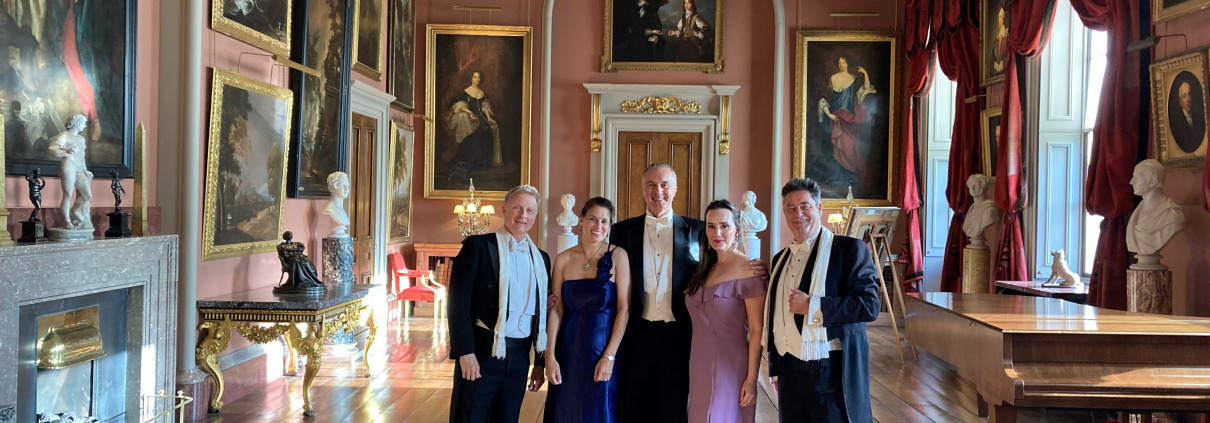
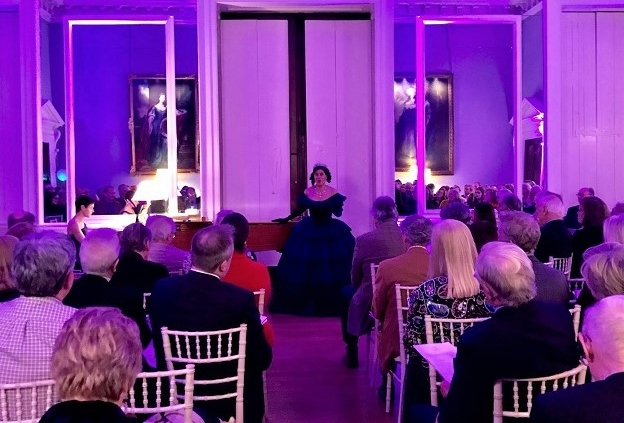
Castle Howard has been the home to the Howard family for over 300 years and is a stunning house designed by Sir John Vanbrugh.  Renowned for its dramatic Baroque architecture and world-class art collection.  The house has been used as the location for many films, in particular for the iconic Granada Television series of ‘Brideshead Revisited’. Recently London Festival Opera presented a programme of arias and ensembles in the long gallery which houses many great master paintings and fine furniture.  There are plans to return to Castle Howard for another performance in the Autumn 2026.

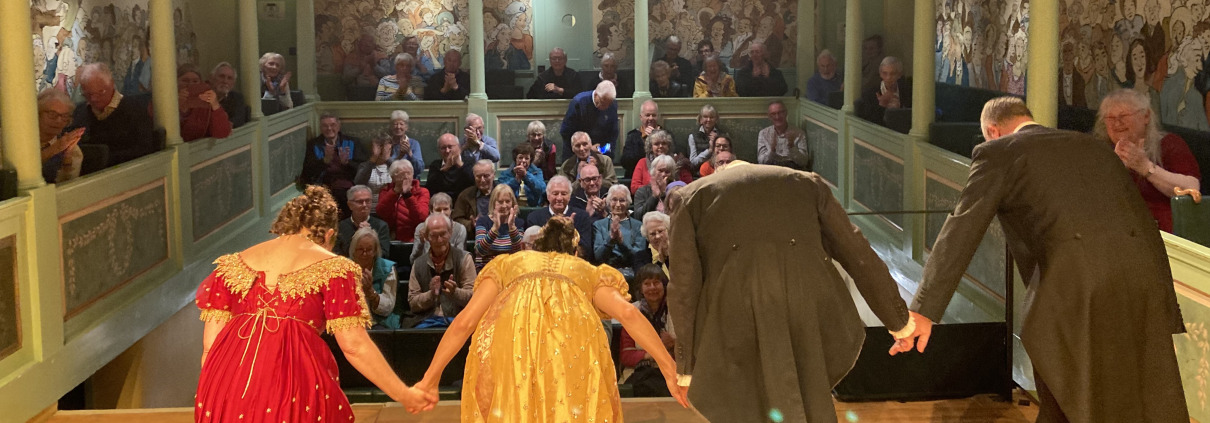
The Georgian Theatre Royal in Richmond Yorkshire is Britain’s oldest working theatre in its original form.  It is both a thriving community playhouse and a living theatre museum.  It was a great pleasure for London Festival Opera to present an Opera Soirée for a private performance recently.  The singers wore Regency evening dress to create an added visual dynamic to a programme of Handel, Mozart, Bizet, Verdi and Gilbert & Sullivan.

One of the exciting part of performing opera is the opportunity to travel.  Performances overseas have taken us across Europe and as far afield as Hong Kong, Mumbai, as well as Canada and Barbados.  We travel extensively in Europe often presenting a ‘surprise opera’ entertainment where waiters or fellow party guests burst into song to the amazement of the real guests.  We are currently planning to return to Italy working with the client to create the perfect programme for the celebratory dinner – including special requests.  On this occasion that includes the Drinking Song from Verdi’s ‘La Traviata’ and ending the evening with an operatic version of a pop song (the final decision will be between ‘Dancing Queen’ and ‘Bohemian Rhapsody’!)

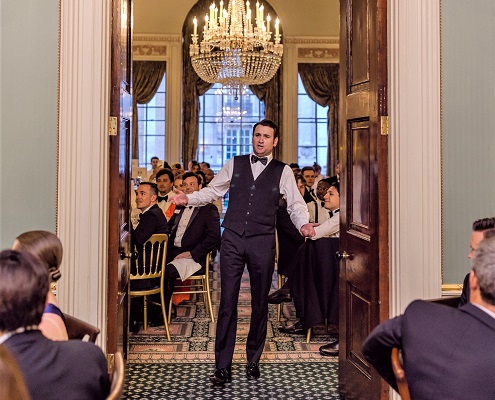
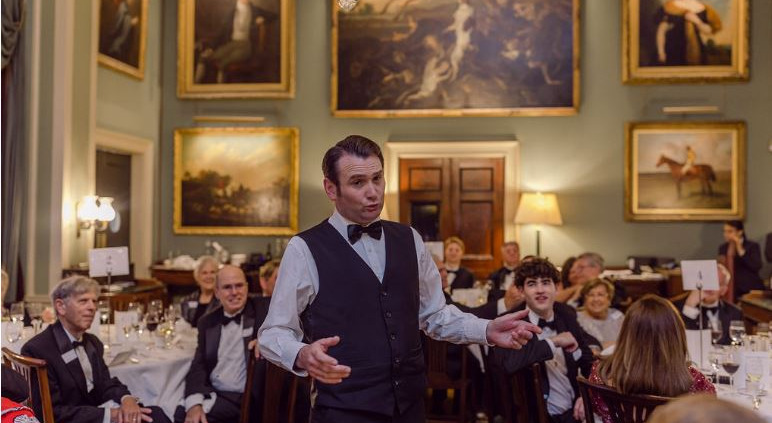
People love the element of surprise that ‘Singing Waiters’ can create. The scenario can be very simple: guests are assembled for drinks or enjoying a meal, after the clink of a glass, a tenor in magnificent voice bursts into a celebrated operatic aria. He can then be joined by a soprano soloist (and for larger events a mezzo-soprano and baritone) for extra impact and variety of repertoire. The programme can include well-known operatic arias, other pieces from the world of the operetta and musicals. London Festival Opera works with a client to create the perfect programme and include special requests of course. We can even end with an operatic ‘Happy Birthday’!

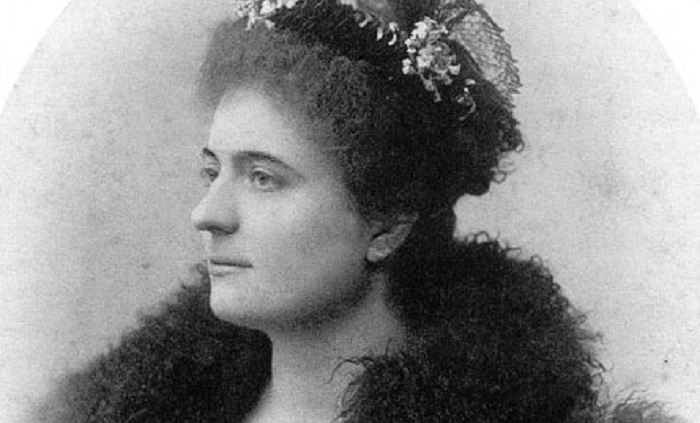
Puccini met Elvira Gemignani in 1884 whilst giving her piano lessons.  She was to become his lover though she was already married.  Soon it became clear that she was expecting a child and not her husbands.  This is was a shocking situation in 19th century Roman Catholic Italy. 

Undoubtedly Elvira and Puccini were happy in the early days before her possessiveness and jealousy dominated their lifelong relationship, and ultimately marriage.  

Elvira had a jealous disposition and attempted to control Puccini.  He was not only creative as a composer.  For instance, he is known to have paid pupils to play the piano in his study giving the impressions that he was there composing.  Meanwhile he slipped out of the windows and Elvira slept soundly thinking he was hard at work at home.

In September 1908 Elvira’s jealousy led to a real-life tragedy as dramatic as an operatic plot.  She became suspicions of one of their servants, the twenty-three year old Doria Manfredi, and was convinced that the girl was sleeping with her husband.  Not only did she dismiss her, but hounded Doria and spread rumours.  The situation became so intolerable to the poor girl that she drank poison and suffered a lingering and painful death.  Puccini, very fond of the Doria, was devastated.  Knowing she was innocent her family sued for defamation and Elvira narrowly avoided imprisonment.  She was in fact sentenced to five months but Puccini stepped in and he and his lawyers persuaded the family to drop the lawsuit and paid them off. 

Elvira was right to have her suspicions: Puccini was having an affair with another woman at that time, but not Doria!

Puccini died in 1924 and Elvira followed him in 1930

Can opera singers sing songs from musicals? The short answer is a resounding yes, but in our experience it’s important to select the right musicals and the right singers.

Some shows like ‘West Side Story’, all the musicals of Rodgers and Hammerstein, ‘Porgy and Bess’, plus many of the works of Sondheim and Lloyd Webber can all work wonderfully, particularly if the singers can loosen their vocal production a little and ‘speak’ to the audience. But this repertoire can be thrilling when the opera singers open up with full throttle – the tenor singing ‘Maria’ for instance, or the ensemble ‘Do you hear the people sing’ from ‘Les Miserables’. Wonderful repertoire!!

Opera singers cannot really do justice to musicals that have more of a jazz concept, such as ‘Chicago’, or a Heavy Rock inspiration. If they did, it may well sound comical – but that could be fun too! French and Saunders’ version of ‘I should be so lucky’ is truly hilarious and inspired us to include some pop songs from time to time including operatic versions of ‘Bohemian Rhapsody’, ‘Rock around the clock’ and ‘Delilah’. This can create an unexpected and powerful encore in a conventional opera programme!

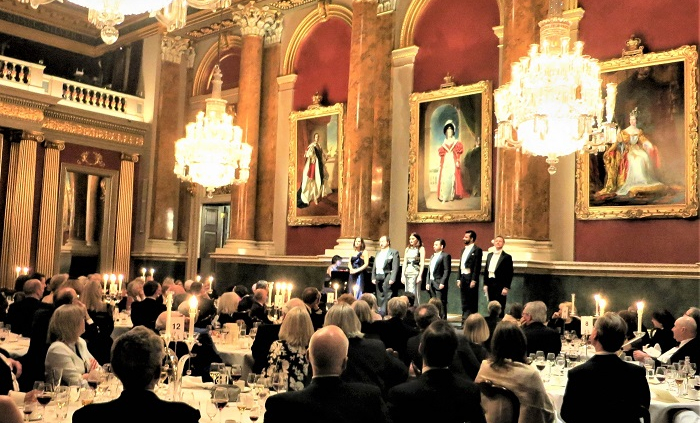
We return to the magnificent Goldsmiths’ Hall in London later in the Spring for ‘A Night at the Musicals’. This is one of our favourite venues.  Our pianist is always particularly keen as the Hall has a superb grand piano!

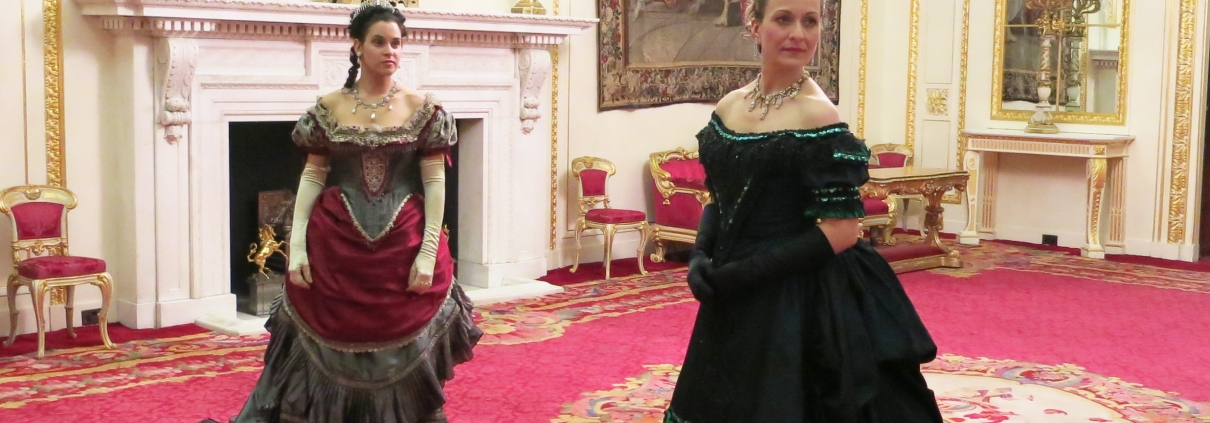
Edwardian costume at the Goldsmiths' Hall

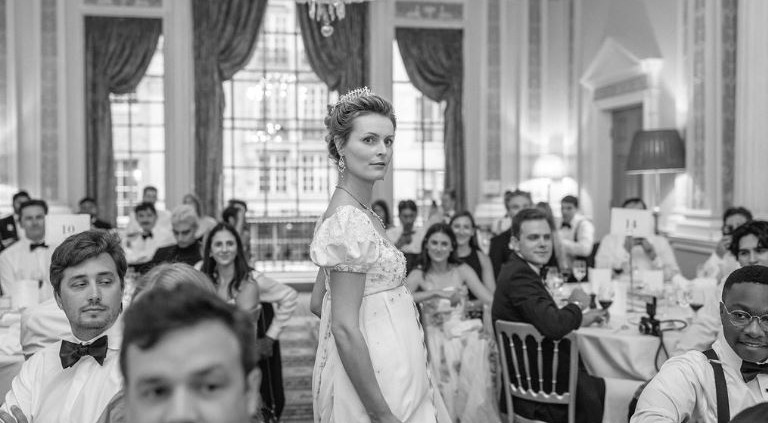
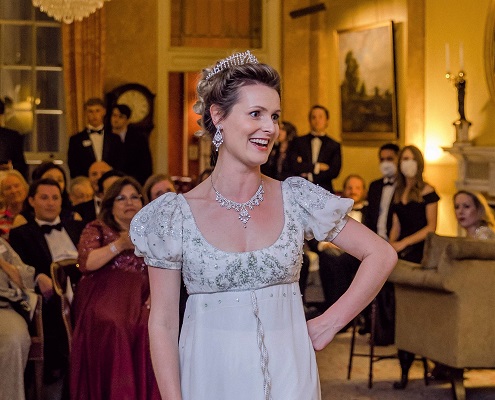
Even if we are presenting an evening of popular opera for a private party or corporate event we would always recommend the singers appearing in period costume for some of the performance.  This gives a wonderful visual impact and enhances the power of the music, and can work particularly well in a period setting.  London Festival Opera has an impressive collection of costumes from the 18th Century, Regency, Victorian and Edwardian eras.  Many have been designed and made especially for the company but some were purchased at the rare costume sales at the Royal Opera House and English National Opera.

Many of our performances are at close quarters, so not only must the costumes be of the highest standards and design, but the accessories of hair and jewellery must be convincing close up. 

Additionally, we have sets of costumes for specific operas including ‘Madame Butterfly’, ‘La Traviata’, ‘The Magic Flute’ and ‘Carmen’.  Similarly, these must look good close up and look convincing in historic settings.  If we are presenting a performance in venues such as St James’s Palace in London, Blenheim Palace or the British Embassy in Paris the costumes must look fabulous enough for the settings.

In an opera gala evening in a theatre or special event we would often perform part one in period costume and then change into stunning contemporary evening dress as a contrast. 

We were honoured to perform for a very distinguished audience in the magnificent setting of Kirtlington Park, Oxfordshire on Saturday evening.  London Festival Opera presented ‘A Christmas Night at the Opera’ in the 18th Century Saloon of the house for a sell-out performance.  The audience joined in a Gilbert and Sullivan chorus which prepared them perfectly to sing an absolutely rousing rendition of ‘Good King Wenceslas’, proving joyfully that people do love to sing!

The evening was in aid of the wonderful charity, Medical Detection Dogs, which trains dogs to detect the odour of human disease.  The charity is at the forefront of the research into the fight against cancer and helping people with life-threatening diseases.  In addition to this extraordinary work the charity also trains Medical Alert Assistance Dogs to live with individuals who have complex health conditions.  Using their amazing sense of smell, the dogs are trained to identify the minute odour changes emitted prior to a medical emergency and then alert the person to take preventative action.  This can help to prevent 999 calls and hospital admissions, giving these people and their families greater confidence and independence. 

Her Royal Highness the Duchess of Cornwall is Patron of the Charity and gave her blessing to the fundraising evening in a letter printed in the programme.  Her Royal Highness wrote: ‘As the proud Patron I would like to send you all my very best wishes for a wonderful evening of opera. …. By translating their research into reality, this charity could save many thousands of lives.’

It was an honour to be invited to help raise funds for such a worthy cause in the breath-taking setting of Kirtlington Park. 

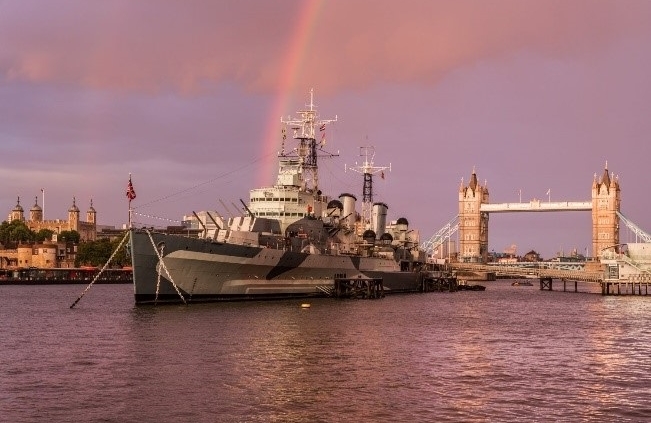
HMS Belfast sits regally on the Thames by Tower Bridge

Where next?  We have been lucky enough to perform in some stunning, unusual and historically important venues around the world, but we believe we made history last week performing opera for the first time during a private dinner in one of the elegant dining rooms on board HMS Belfast. Moored on the Thames by Tower Bridge in the heart of London and now open to the public for 362 days of the year, HMS Belfast is a fascinating museum ship supported by the Imperial War Museum and is well worth a visit! 

The historic ship was originally launched on St Patrick’s Day in 1939 shortly before the outbreak of World War II.  She was built as a town-class light cruiser for the Royal Navy but after the outbreak of war she saw a great deal of action acting as a blockade ship, escorting convoys and in battle.  After being struck by a German mine she underwent repairs and returned to action in 1942, going on to play a pivotal role in the Normandy landings.  She is one of only three remaining vessels from the bombardment fleet which supported the Normandy landings on 6 June 1944 – the other two are now moored in the United States.  Her bombardment of the German gun battery at La Marefontaine at Gold and Juno beaches meant that the battery was able to play no meaningful part in the defence of the beaches, allowing large numbers of allied troops to land in relative safety. 

Legend has it that HMS Belfast fired the opening shots at the Normandy landings on 6th June 1944, however the ship’s log confirms her first shots were actually fired four minutes after the first shot from a ship lying just to her west.  During her 33 days supporting the landings, HMS Belfast fired an incredible total of over 5,000 shells and the force from the constant firing of her impressive armament of guns cracked the crew’s loos!  The invasion of Normandy was the last time HMS Belfast fired her guns.  In July of that year, she set sail for Plymouth Devonport and a well-earned refit, before being despatched to the Far East.

A final fascinating fact about HMS Belfast:  as she sits by Tower Bridge her guns are trained and elevated in such a way that they are aimed directly at the London Gateway (or Scratchwood Services), the last service station on the M1 before you get to London.  The service station was chosen as the hypothetical target for obliteration as it happens to sit neatly on the radius of the guns’ comfortable range (about 18.5 km at 45º elevation).  Of course, the guns are no longer loaded or capable of firing, so you’re pretty safe if you stop there for a sandwich!